How Energy Management Systems for Commercial Buildings Reduce HVAC and Refrigeration Costs
Quick Summary
Energy management systems for commercial buildings help facility managers monitor HVAC, refrigeration, lighting, controls, temperatures, equipment runtime, and energy consumption from a centralized platform. By identifying unnecessary runtime, abnormal energy use, temperature drift, inefficient setpoints, and developing equipment problems, an energy management system can help reduce energy waste while improving building performance. For facilities with energy-intensive HVAC and refrigeration equipment, centralized monitoring also provides better information for maintenance, repair, and equipment replacement decisions.
The Hidden Cost of Equipment You Cannot See
Commercial buildings can waste energy without showing obvious signs of trouble.
An HVAC unit may run longer than necessary. A refrigeration compressor may cycle more frequently than normal. Operating schedules may no longer match actual business hours. Temperature setpoints may drift. Equipment at one location may use considerably more energy than comparable equipment at another.
The systems are still running, so no emergency service call is triggered. The first visible sign of trouble may simply be a higher utility bill.
This is where energy management systems for commercial buildings can change the way a facility is operated.
Instead of waiting for a breakdown or relying only on monthly utility bills, facility managers can use building and equipment data to understand when systems are operating, how they are performing, and where abnormal conditions may be developing.
For a closer look at common sources of energy waste, read TrueServ Mechanical’s How to Reduce Energy Consumption in Commercial Buildings.
What Does a Commercial Building Energy Management System Do?
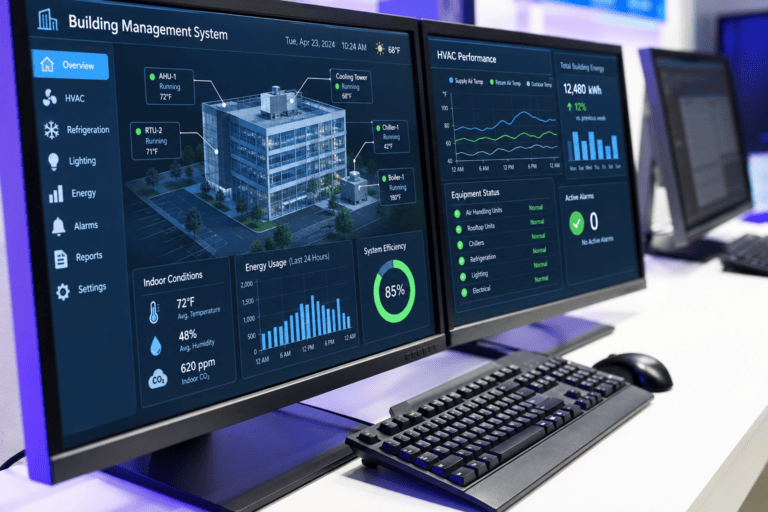
A commercial building energy management system connects equipment, sensors, controls, monitoring, and data into a centralized platform.
Depending on the facility and system configuration, it may provide visibility into:
- HVAC operating schedules
- Heating and cooling setpoints
- Refrigeration temperatures
- Equipment runtime
- Lighting controls
- Temperature sensors
- Energy consumption
- Equipment alarms
- Performance across multiple locations
The goal is not simply to collect more data. The goal is to turn building data into useful operational information.
The U.S. Department of Energy describes energy management information systems as software tools that monitor, analyze, and control building energy use and system performance.
When facility teams can see what their equipment is actually doing, they can make decisions based on operating conditions rather than assumptions.
How Energy Management Systems Help Reduce HVAC Costs
HVAC equipment represents a major opportunity for commercial building energy management because operating schedules and control settings directly affect how long equipment runs.
1. They identify unnecessary runtime
Equipment may start too early, stop too late, or continue operating after normal business hours. Centralized monitoring makes those patterns easier to identify.
Correcting unnecessary runtime can reduce energy consumption without sacrificing occupant comfort.
2. They detect performance changes
A unit that suddenly begins running longer to maintain the same conditions may be signaling a developing mechanical or controls problem.
Energy data does not replace professional diagnostics, but it can help facility managers recognize that something has changed.
If equipment performance is becoming less reliable, TrueServ Mechanical provides commercial HVAC repair, maintenance, installation, and replacement support.
3. They improve control over multiple locations
For companies operating several facilities, comparing performance from one location to another can reveal inconsistencies that would otherwise be difficult to identify.
One store may have equipment running overnight. Another may have different setpoints. Another may be experiencing excessive cycling.
Commercial building energy management systems give facility teams a more consistent view across the portfolio.
How Energy Management Helps Commercial Refrigeration
Refrigeration adds another layer of complexity because many commercial systems operate continuously.
Grocery stores, convenience stores, restaurants, cold storage facilities, healthcare operations, and food distribution facilities cannot simply turn refrigeration equipment off when the building closes.
That makes efficiency, temperature stability, and early problem detection particularly important.
Energy management systems can help facility managers monitor refrigeration temperatures, runtime patterns, alarms, and abnormal changes in equipment behavior.
For example, increased compressor runtime may point to dirty coils, airflow restrictions, deteriorating door seals, control issues, or other conditions that deserve investigation.
TrueServ Mechanical provides commercial refrigeration service for facilities that need repair, installation, maintenance, and performance support.
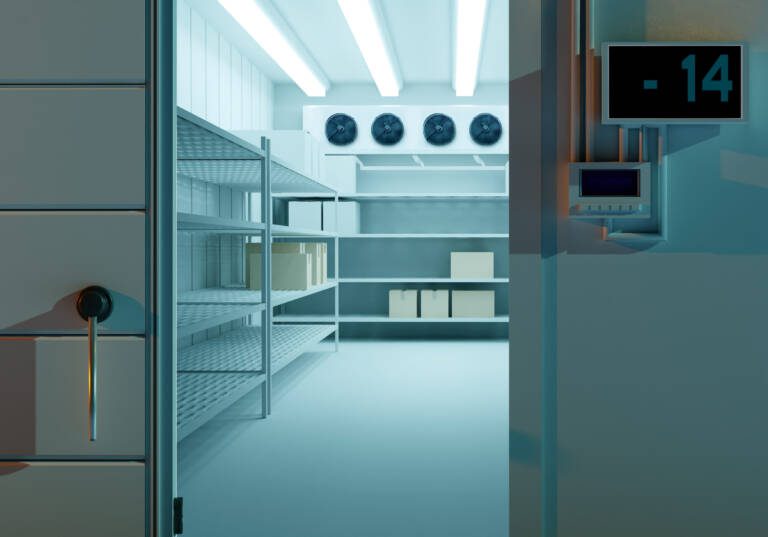
Preventive maintenance remains an important part of controlling refrigeration operating costs. Our guide, How Often Should Commercial Refrigeration Be Serviced?, explains how equipment demands and operating conditions affect maintenance frequency.
Energy Management Is More Than an Energy-Saving Tool
Reducing utility costs is important, but energy management in commercial buildings can provide another valuable benefit: better operational visibility.
A well-designed system can help answer questions such as:
- Which equipment is running when it should not be?
- Which location is using more energy than comparable facilities?
- Are temperature conditions beginning to drift?
- Did a recent repair actually improve performance?
- Is equipment performance deteriorating?
- Are operating schedules being followed consistently?
- Where should maintenance teams investigate first?
That information can support decisions about maintenance, repairs, controls, and capital planning.
It can also help prevent a common facility-management problem: waiting until equipment fails before realizing its performance had been declining for weeks or months.
For more strategies on preventing mechanical interruptions, see How to Reduce HVAC System Downtime in Commercial Facilities.
Do You Need to Replace Equipment First?
Not necessarily. One of the advantages of energy management systems for commercial buildings is that many facilities can improve monitoring and control without replacing every HVAC or refrigeration system.

The right approach depends on existing equipment, controls, building configuration, operating schedules, and the level of monitoring the organization needs.
Older or inefficient equipment may eventually warrant replacement, but better information can help a facility make that decision based on actual operating performance rather than age alone.
If energy management improvements are part of a larger HVAC or refrigeration upgrade, TrueServ also offers financing options that can help businesses move forward without placing the full cost into the current capital budget.
When Does Commercial Energy Management Make Sense?
Energy management can be particularly useful for facilities with:
- High HVAC or refrigeration energy use
- Multiple locations
- Long or changing operating hours
- Unexplained increases in utility costs
- Temperature-sensitive operations
- Frequent equipment alarms
- Inconsistent performance between locations
- A need for centralized facility visibility
The best system is not necessarily the one with the most features. It is the one that gives the facility useful information and enough control to act on it.
Turn Building Data Into Better Decisions
Energy management systems for commercial buildings give facility managers something traditional reactive maintenance cannot provide: ongoing visibility into how building systems are actually operating.
For facilities with commercial HVAC and refrigeration equipment, that visibility can help identify energy waste, uncover developing problems, improve operating consistency, and support smarter maintenance and capital decisions.
TrueServ Mechanical designs, installs, and supports commercial energy management systems built around real facility operations, including HVAC and refrigeration performance.
FAQS
What is an energy management system for a commercial building?
An energy management system for a commercial building uses connected controls, sensors, monitoring, and software to track building energy use and equipment performance. Depending on the system, it may monitor or control HVAC, refrigeration, lighting, temperatures, schedules, alarms, and other building functions.
Can an energy management system reduce HVAC costs?
An energy management system can help identify unnecessary HVAC runtime, inefficient schedules, abnormal operating patterns, and control issues that contribute to energy waste. Correcting those conditions can reduce unnecessary energy use while maintaining building comfort.
Can energy management systems monitor commercial refrigeration?
Yes. Commercial energy management systems can be configured to monitor refrigeration temperatures, alarms, equipment runtime, and other performance indicators. This can help facility teams identify abnormal conditions before they become larger operational problems.
Do I need to replace my HVAC equipment to install an energy management system?
Not always. Many facilities can add monitoring and controls to existing equipment. The appropriate approach depends on the equipment, existing controls, facility configuration, and the organization’s performance goals.
Are energy management systems only for large commercial buildings?
No. Energy management systems can benefit individual commercial buildings as well as multi-location operations. The value depends more on equipment, energy use, operating complexity, and the need for monitoring and control than on building size alone.