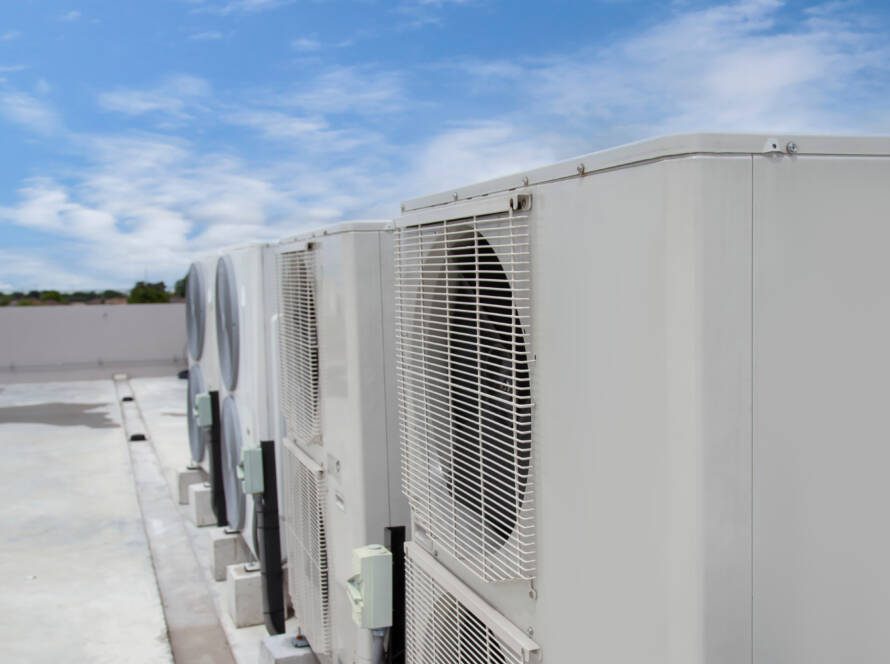
Energy Management Systems for HVAC: Reduce Commercial Energy Waste
Quick Summary
Energy management systems help commercial HVAC equipment operate according to building schedules, temperature requirements, and actual demand. Depending on their capabilities, these systems can reveal unnecessary runtime, incorrect settings, and equipment performance problems. Reviewing that information and correcting the causes can reduce energy waste while maintaining comfort, ventilation, and required operating conditions.
Where Commercial HVAC Energy Waste Begins
Your HVAC equipment may keep the building comfortable while using more energy than necessary. A rooftop unit can cool an empty office overnight. A thermostat can retain settings from a previous tenant. An override intended for one evening can remain active for weeks.
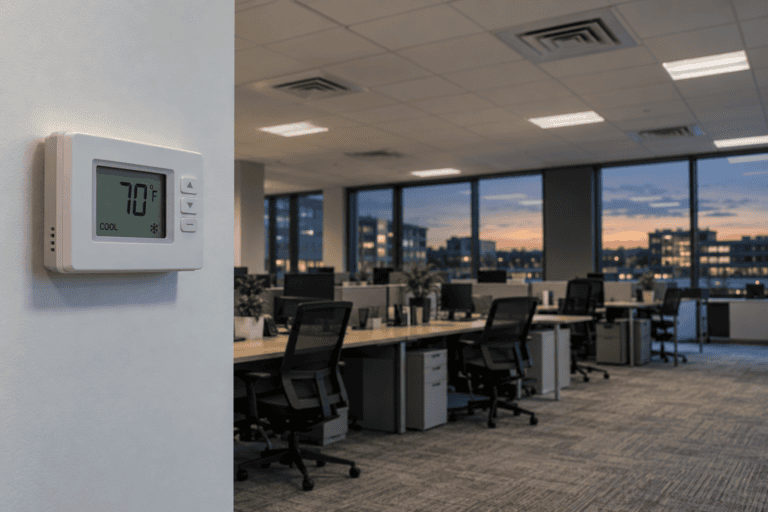
These problems are easy to overlook when equipment still appears to work. Higher utility bills may be the first noticeable sign.
The goal is to understand when equipment operates, why it operates, and whether that operation matches the building’s needs. Energy management provides information that helps facility teams investigate those questions and prioritize corrective work.
How Energy Management Systems Support HVAC Efficiency
An HVAC energy management system can combine equipment information, sensors, software, and controls. Its capabilities depend on the installation. Some systems primarily monitor performance, while others also adjust schedules and settings.
Useful information may include temperatures, equipment runtime, alarms, and energy use. Together, these records can help reveal patterns that a single thermostat reading misses.
The U.S. Department of Energy’s Better Buildings resource library explains the different types of monitoring, diagnostic, and optimization tools in its energy management and information systems primer: https://betterbuildingssolutioncenter.energy.gov/resources/primer-organizational-use-energy-management-and-information-systems-emis.
Monitoring alone does not correct a problem. Someone must review the findings, investigate the cause, and make appropriate adjustments.
Learn how TrueServ Mechanical supports equipment monitoring, scheduling adjustments, and operational improvements through its commercial energy management services: https://www.trueservmechanical.com/commercial-energy-management-systems/.
For a broader look at how these systems support building performance, read our guide to energy management systems for commercial buildings: https://www.trueservmechanical.com/energy-management-systems-commercial-buildings/.
Four HVAC Operating Problems Worth Investigating
Compare HVAC schedules with actual occupancy. Include cleaning crews, deliveries, weekend activity, and spaces with special temperature requirements.
For example, an office that closes at 6 p.m. may still need ventilation or conditioning for an evening crew. However, operating every zone at daytime settings until midnight may be unnecessary.
Review schedules by area rather than applying one blanket setting to the entire building.
1. Overrides Become Permanent
Temporary overrides help accommodate unusual activity. Trouble begins when nobody restores the normal schedule.
Check whether staff can see active overrides and whether the controls allow them to expire automatically. Repeated overrides may also indicate that the original schedule no longer fits the business.
Correct the underlying scheduling problem instead of repeatedly asking employees to work around it.
2. Sensors and Settings Give the Wrong Picture
A poorly located or inaccurate sensor can cause equipment to respond to conditions that do not represent the occupied space.
A sensor near sunlight, a doorway, or a heat-producing appliance may produce misleading readings. Conflicting thermostat settings can also make different zones work against each other.
A technician should check sensor accuracy, placement, and control settings before recommending adjustments.
3. Runtime Increases Without Better Performance
Longer runtime does not automatically mean equipment needs replacement. Dirty coils, airflow restrictions, control faults, or changing building loads may contribute.
Look for patterns such as equipment running longer while temperatures become harder to maintain. Those findings deserve a mechanical inspection.
Our article on reducing HVAC system downtime explains how maintenance and early attention to equipment problems support reliable operation: https://www.trueservmechanical.com/how-to-reduce-hvac-system-downtime/.
4. Equipment Runs Beyond Required Hours
Compare HVAC schedules with actual occupancy. Include cleaning crews, deliveries, weekend activity, and spaces with special temperature requirements.
For example, an office that closes at 6 p.m. may still need ventilation or conditioning for an evening crew. However, operating every zone at daytime settings until midnight may be unnecessary.
Review schedules by area rather than applying one blanket setting to the entire building.
Use Controls and Maintenance Together
Commercial HVAC energy efficiency depends on both equipment condition and how the system operates.
A scheduling adjustment cannot clean a dirty coil. A new filter cannot correct an inaccurate occupancy schedule. Reviewing controls and mechanical condition together helps prevent one issue from hiding another.
Maintenance visits also provide an opportunity to compare current settings with the building’s actual use. Have operating hours changed? Has a space become more crowded? Has new equipment added heat to the building?
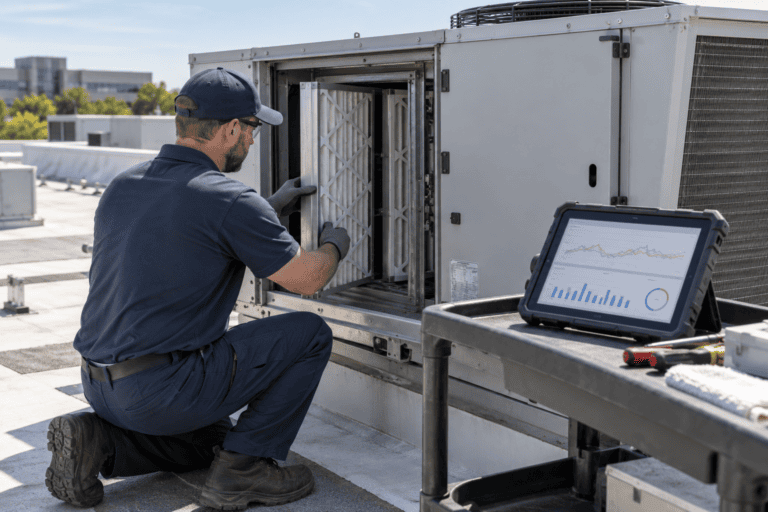
For more about the operational consequences of deferred service, read what happens when businesses skip commercial HVAC maintenance: https://www.trueservmechanical.com/what-happens-when-businesses-skip-commercial-hvac-maintenance/.
Protect Refrigeration and Critical Spaces
Businesses with refrigeration equipment must distinguish comfort cooling from systems that protect products or processes.
A walk-in cooler cannot follow the same overnight setback strategy as an empty office. Refrigerated storage, server rooms, and other critical spaces may require continuous conditioning and specific temperature limits.
Monitoring can still help identify abnormal runtime or temperature changes. However, adjustments must preserve required conditions and account for equipment specifications.
TrueServ’s commercial refrigeration services address repair, installation, and maintenance needs for temperature-sensitive operations: https://www.trueservmechanical.com/commercial-refrigeration/.
Decide What to Adjust, Repair, or Replace
Start with the problem you want to solve. High bills, repeated comfort complaints, and excessive runtime may have different causes.
Review available operating records alongside equipment condition. A schedule correction may resolve unnecessary runtime. A faulty sensor may need replacement. Aging equipment with recurring mechanical problems may require a broader upgrade.

Before investing, ask which equipment can connect to the proposed controls, what information will be available, and who will respond when problems appear.
If equipment replacement becomes part of the plan, explore TrueServ’s commercial HVAC installation services: https://www.trueservmechanical.com/commercial-hvac-installation/.
Our guide to commercial HVAC replacement with a tight capital budget discusses planning improvements when funding is limited: https://www.trueservmechanical.com/commercial-hvac-replacement-tight-capital-budget/.
Check Whether Changes Improve Performance
Record the starting conditions before making adjustments. Useful records include operating schedules, temperature trends, runtime, utility consumption, and occupant complaints.
After the work, compare similar periods while accounting for weather, occupancy, and business activity. A lower bill during cooler weather does not establish that a controls adjustment caused the reduction.
Continue checking comfort and critical temperatures. Successful energy management reduces unnecessary operation while maintaining the conditions the business needs.
Take a Closer Look at Your Building’s HVAC Operation
If your building has rising energy costs, inconsistent temperatures, or equipment that runs longer than expected, start by investigating how the system operates.
TrueServ Mechanical helps commercial businesses evaluate energy management needs and coordinate appropriate HVAC, refrigeration, and controls improvements. An assessment can help identify which issues deserve attention first.
FAQS
What do energy management systems do for commercial HVAC?
Depending on their capabilities, energy management systems monitor HVAC performance, manage schedules and settings, or identify operating problems. Facility teams use that information to investigate unnecessary runtime and improve operation.
Can energy management controls work with existing HVAC equipment?
Often, but compatibility must be evaluated. Equipment controls, communication capabilities, condition, and the proposed system determine whether existing equipment can connect or needs additional components.
Will changing HVAC schedules affect comfort?
It can if changes ignore occupancy, ventilation, or temperature requirements. Schedules should reflect actual building use, with follow-up checks to confirm that occupied spaces remain comfortable.
Do energy management systems replace preventive maintenance?
No. Energy management systems help identify operating patterns and potential problems. Preventive maintenance addresses physical equipment condition. Both contribute to efficient, reliable HVAC operation.